
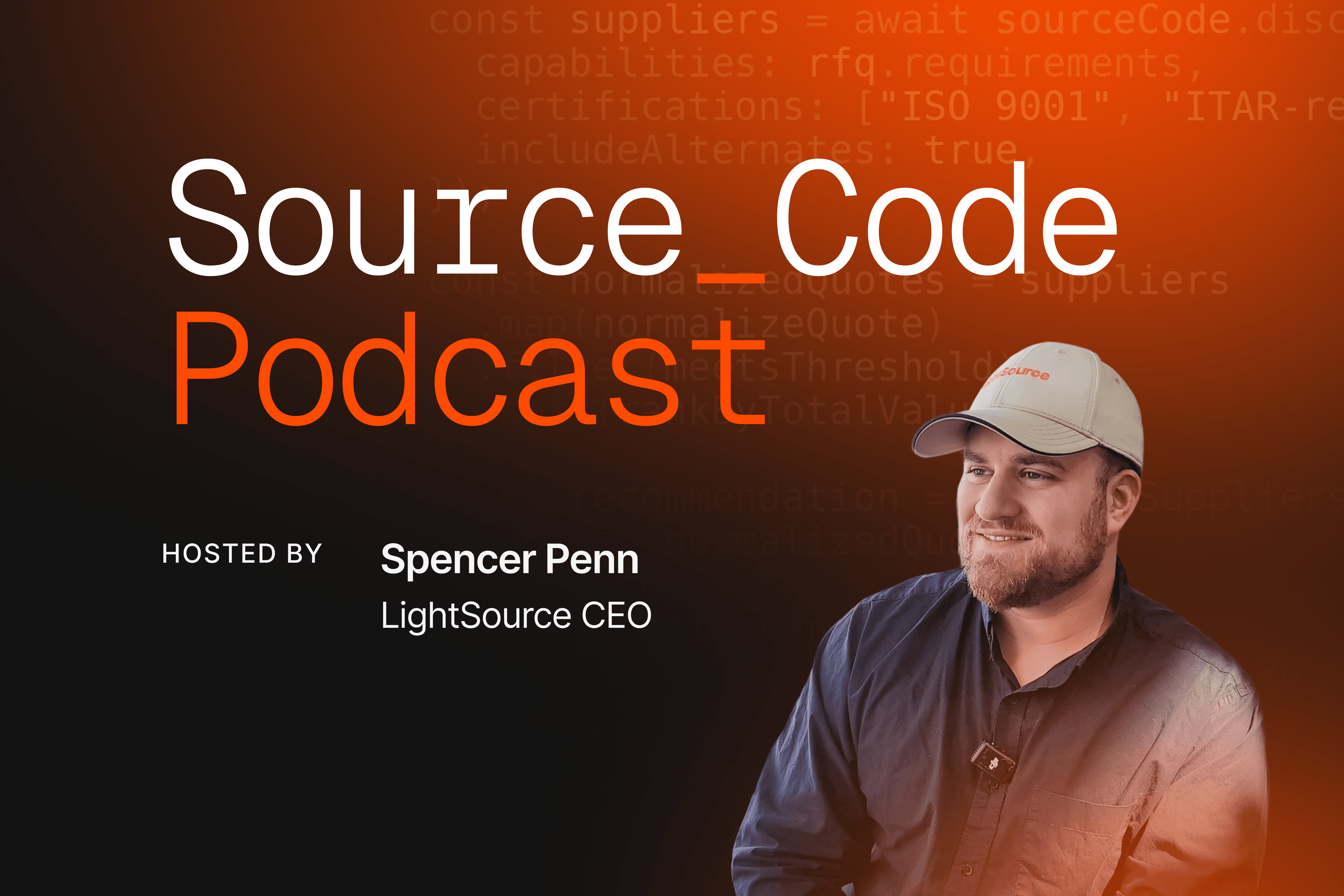
We built LightSource for the people actually doing procurement. Not the consultants writing frameworks about it. The operators, the leaders, the practitioners who show up every day and make hard calls about cost, risk, suppliers, and internal stakeholders who are not always easy to convince.
Source Code is our podcast. Candid conversations with the people shaping direct materials procurement, what they have learned, what they have gotten wrong, and where they think the industry is heading.
The first three episodes are out now. You can find us on Apple Podcasts, Spotify and where ever you get your podcasts.
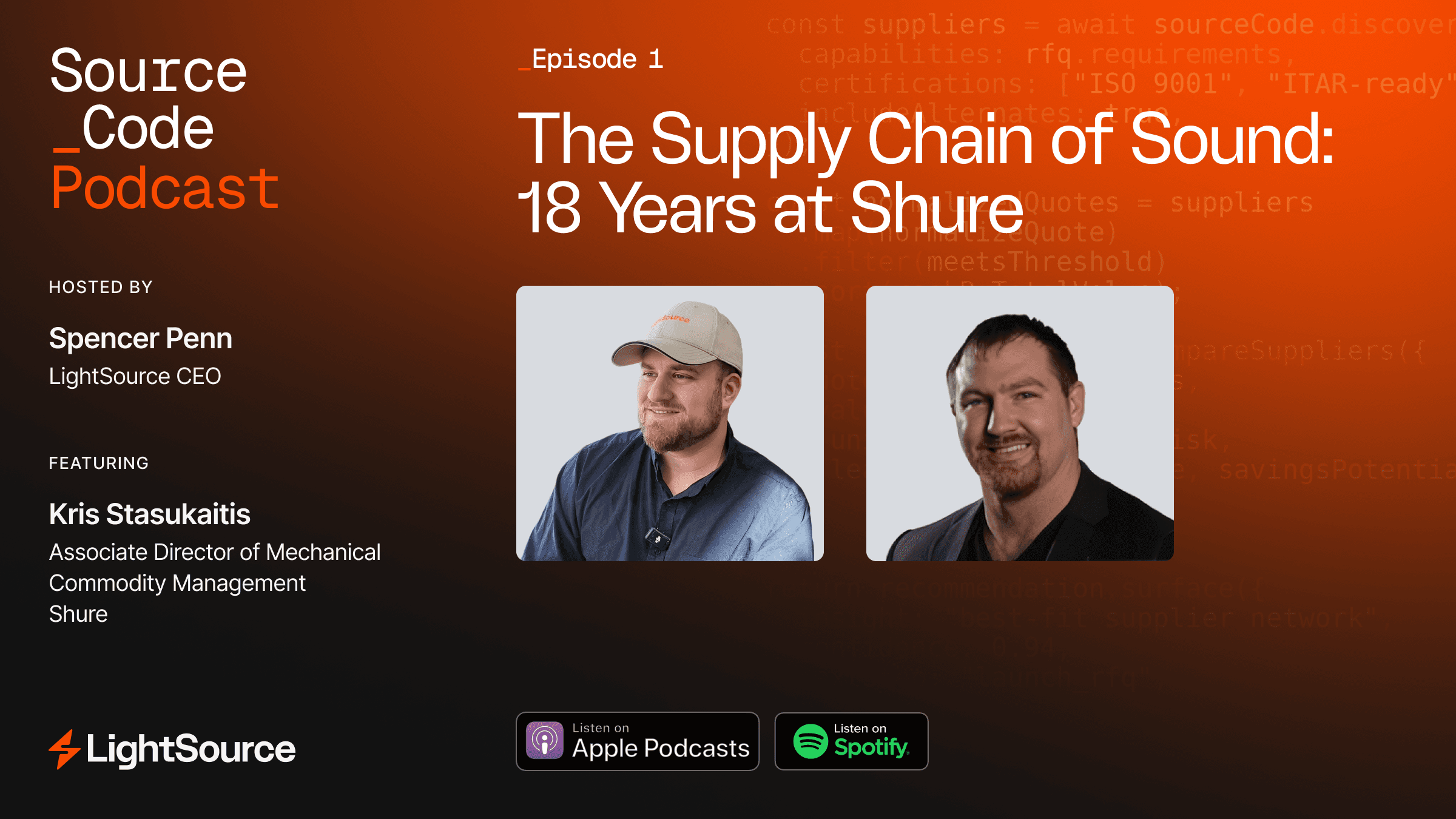
Episode 1: The Supply Chain of Sound: 18 Years at Shure
Guest: Kris Stasukaitis, Associate Director of Mechanical Commodity Management, Shure
Listen on Spotify | Listen on Apple Podcast
Kris Stasukaitis is one of the rare people who studied supply chain and has spent nearly two decades doing exactly that. He joined Shure straight from a stint in consulting, and has watched the company grow from a microphone manufacturer into a diversified audio portfolio serving everyone from touring artists to enterprise conferencing.
In this episode, Kris walks through what supply chain looks like inside a company that makes products you can spot at any major venue. Shure runs high-mix, low-volume across highly engineered parts with exacting cosmetic standards. That combination makes sourcing hard, especially when you are also trying to regionalize away from China at a moment when everyone else is doing the same thing.
The conversation covers how to build a dual sourcing case before the crisis hits, what the chip shortage forced the team to do, and how Shure thinks about supplier relationships as long-term investments rather than transactions. Kris also shares how should-cost modeling has changed the quality of conversations with suppliers, allowing the procurement team to have data-driven discussions about cost buckets without touching supplier margin.
“If you don’t have another switch that you can flip, you’re dead.”
Connect with Kris: LinkedIn
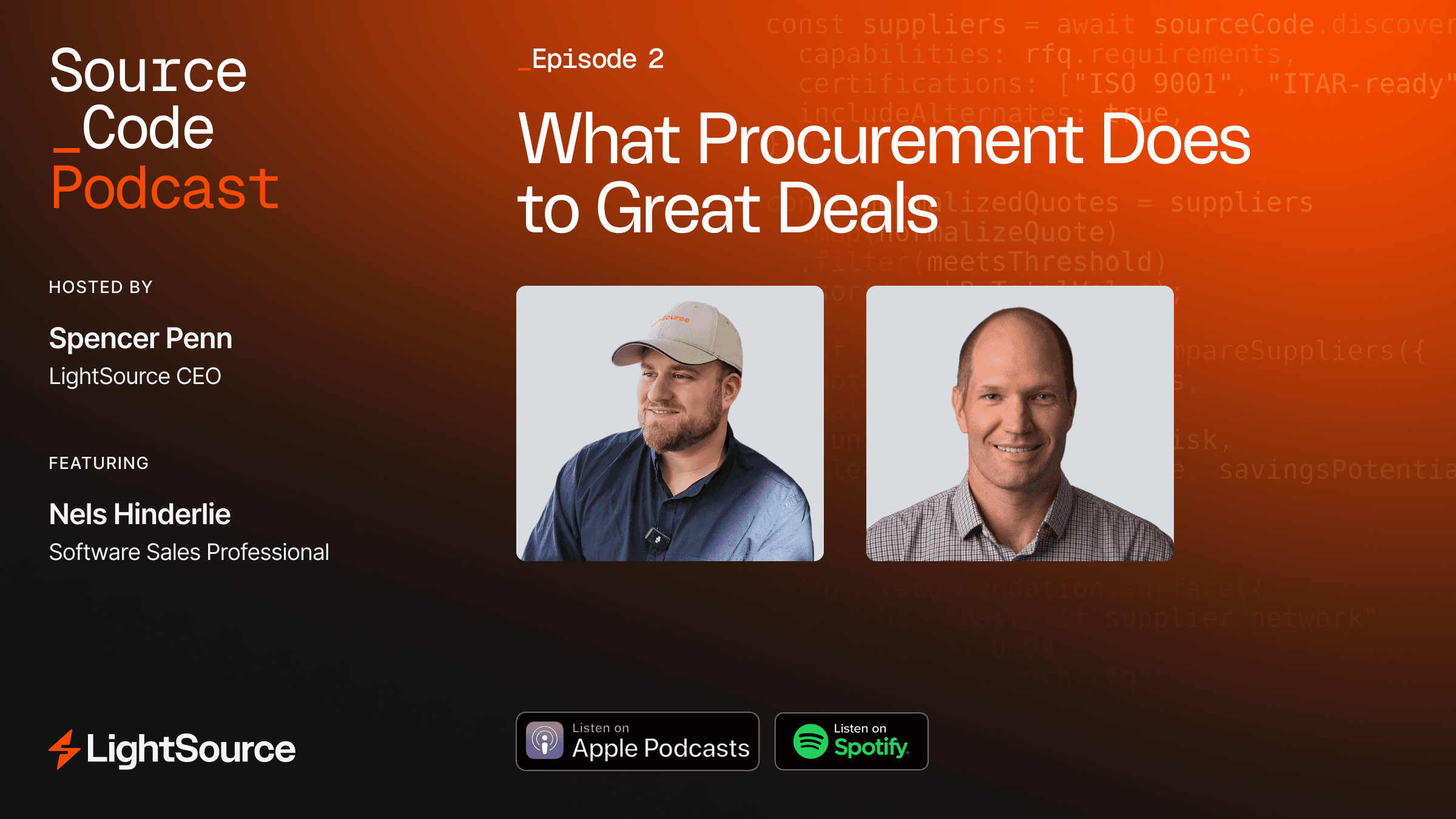
Episode 2: What Procurement Does to Great Deals
Guest: Nels Hinderlie, Software Sales Professional
Listen on Spotify | Listen on Apple Podcast
Nels Hinderlie has spent over a decade on the other side of the table. As a software sales professional, he has worked through more procurement processes than he can count. He also happens to be married to a procurement director, which gives him an unusually honest read on both sides of the dynamic.
The episode unpacks something most people in procurement and sales both feel but rarely say out loud: the relationship is adversarial when it does not have to be. Nels describes how procurement has changed over the last five years, review cycles now include IT, legal, data privacy, and AI vetting, and what that means for how deals actually move. He makes the case that strong procurement professionals help deals close faster, not slower, by being upfront about the real process and the real timeline rather than letting sales teams operate on wishful thinking.
The conversation also gets into RFPs and pilots, what makes them useful and what makes them a waste of everyone’s time, and how AI has shifted what good outreach and good research look like in enterprise sales.
“Procurement is always part of every single sales process that I’ve been a part of.”
Connect with Nels: LinkedIn | Website
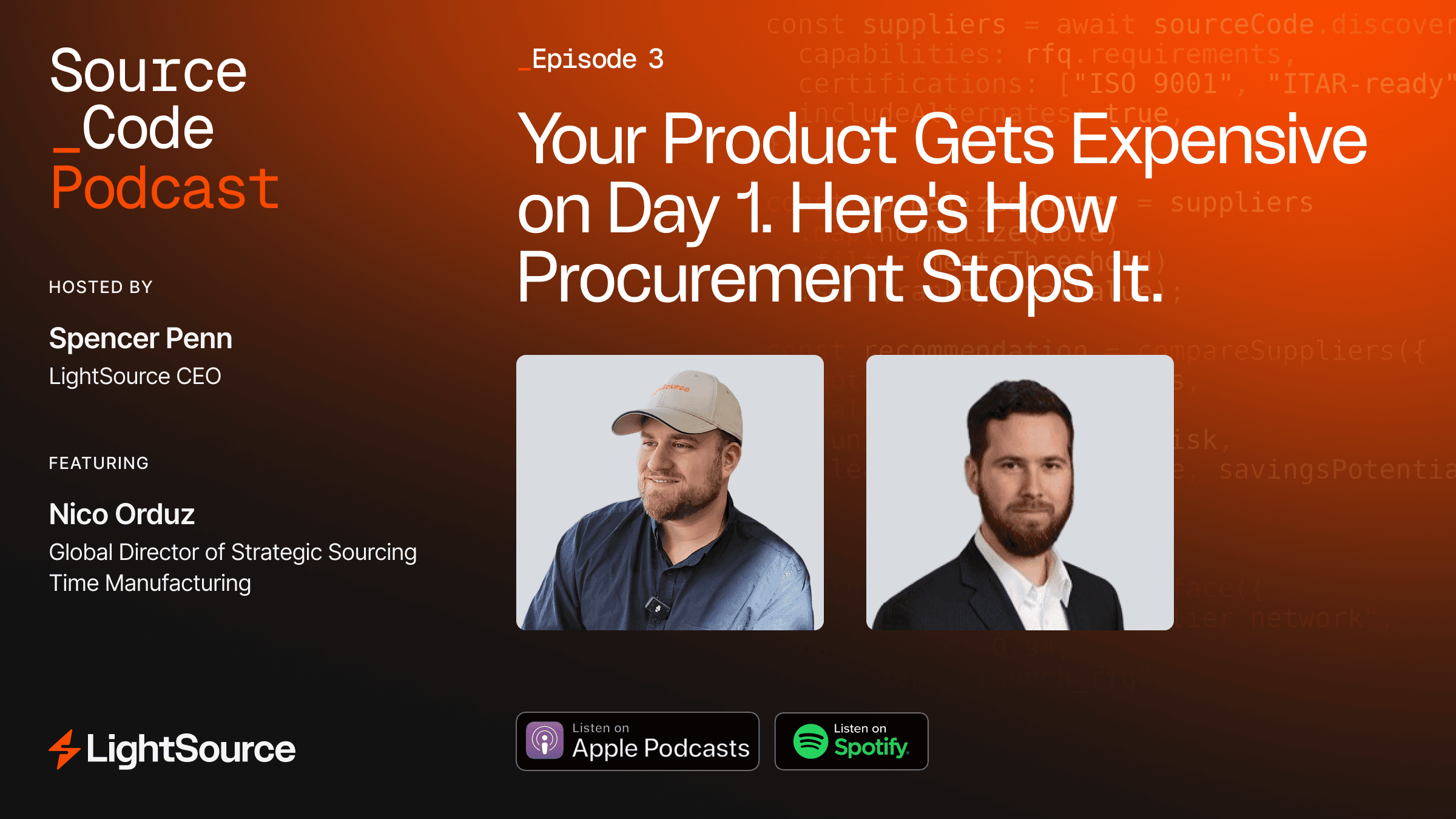
Episode 3: Your Product Gets Expensive on Day 1. Here’s How Procurement Stops It.
Guest: Nico Orduz, Global Director of Strategic Sourcing, Time Manufacturing
Listen on Spotify | Listen on Apple Podcast
Nico Orduz built the strategic sourcing function at Time Manufacturing from scratch. He hired the team, set the strategy, and learned along the way that procurement is as much a sales job internally as it is a negotiation job externally.
The core argument of this episode: by the time engineering releases drawings, most of the cost is already locked in. Procurement that shows up after the design is done is not strategic sourcing. It is damage control. Nico explains what it looks like to be at the table from day zero, how to run stage gates that actually kill bad projects early, and how to bring suppliers in as subject matter experts during development rather than treating them as vendors you qualify later.
He also gets into the topics where procurement leaders lose leverage quietly: vendor lock-in, IP ownership, duopoly supplier markets, and the difference between hard savings and cost avoidance. And he addresses tariffs honestly, noting that the noise phase is over and the real impact is showing up on invoices now, which means should-cost modeling and scenario planning are no longer optional.
“You negotiate the deal, then you sell the value internally.”
Connect with Nico: LinkedIn
Subscribe on Apple Podcasts, Spotify or where ever you get your podcasts and never miss an episode.
We built LightSource for the people actually doing procurement. Not the consultants writing frameworks about it. The operators, the leaders, the practitioners who show up every day and make hard calls about cost, risk, suppliers, and internal stakeholders who are not always easy to convince.
Source Code is our podcast. Candid conversations with the people shaping direct materials procurement, what they have learned, what they have gotten wrong, and where they think the industry is heading.
The first three episodes are out now. You can find us on Apple Podcasts, Spotify and where ever you get your podcasts.
Episode 1: The Supply Chain of Sound: 18 Years at Shure
Guest: Kris Stasukaitis, Associate Director of Mechanical Commodity Management, Shure
Listen on Spotify | Listen on Apple Podcast
Kris Stasukaitis is one of the rare people who studied supply chain and has spent nearly two decades doing exactly that. He joined Shure straight from a stint in consulting, and has watched the company grow from a microphone manufacturer into a diversified audio portfolio serving everyone from touring artists to enterprise conferencing.
In this episode, Kris walks through what supply chain looks like inside a company that makes products you can spot at any major venue. Shure runs high-mix, low-volume across highly engineered parts with exacting cosmetic standards. That combination makes sourcing hard, especially when you are also trying to regionalize away from China at a moment when everyone else is doing the same thing.
The conversation covers how to build a dual sourcing case before the crisis hits, what the chip shortage forced the team to do, and how Shure thinks about supplier relationships as long-term investments rather than transactions. Kris also shares how should-cost modeling has changed the quality of conversations with suppliers, allowing the procurement team to have data-driven discussions about cost buckets without touching supplier margin.
“If you don’t have another switch that you can flip, you’re dead.”
Connect with Kris: LinkedIn
Episode 2: What Procurement Does to Great Deals
Guest: Nels Hinderlie, Software Sales Professional
Listen on Spotify | Listen on Apple Podcast
Nels Hinderlie has spent over a decade on the other side of the table. As a software sales professional, he has worked through more procurement processes than he can count. He also happens to be married to a procurement director, which gives him an unusually honest read on both sides of the dynamic.
The episode unpacks something most people in procurement and sales both feel but rarely say out loud: the relationship is adversarial when it does not have to be. Nels describes how procurement has changed over the last five years, review cycles now include IT, legal, data privacy, and AI vetting, and what that means for how deals actually move. He makes the case that strong procurement professionals help deals close faster, not slower, by being upfront about the real process and the real timeline rather than letting sales teams operate on wishful thinking.
The conversation also gets into RFPs and pilots, what makes them useful and what makes them a waste of everyone’s time, and how AI has shifted what good outreach and good research look like in enterprise sales.
“Procurement is always part of every single sales process that I’ve been a part of.”
Connect with Nels: LinkedIn | Website
Episode 3: Your Product Gets Expensive on Day 1. Here’s How Procurement Stops It.
Guest: Nico Orduz, Global Director of Strategic Sourcing, Time Manufacturing
Listen on Spotify | Listen on Apple Podcast
Nico Orduz built the strategic sourcing function at Time Manufacturing from scratch. He hired the team, set the strategy, and learned along the way that procurement is as much a sales job internally as it is a negotiation job externally.
The core argument of this episode: by the time engineering releases drawings, most of the cost is already locked in. Procurement that shows up after the design is done is not strategic sourcing. It is damage control. Nico explains what it looks like to be at the table from day zero, how to run stage gates that actually kill bad projects early, and how to bring suppliers in as subject matter experts during development rather than treating them as vendors you qualify later.
He also gets into the topics where procurement leaders lose leverage quietly: vendor lock-in, IP ownership, duopoly supplier markets, and the difference between hard savings and cost avoidance. And he addresses tariffs honestly, noting that the noise phase is over and the real impact is showing up on invoices now, which means should-cost modeling and scenario planning are no longer optional.
“You negotiate the deal, then you sell the value internally.”
Connect with Nico: LinkedIn
Subscribe on Apple Podcasts, Spotify or where ever you get your podcasts and never miss an episode.
We built LightSource for the people actually doing procurement. Not the consultants writing frameworks about it. The operators, the leaders, the practitioners who show up every day and make hard calls about cost, risk, suppliers, and internal stakeholders who are not always easy to convince.
Source Code is our podcast. Candid conversations with the people shaping direct materials procurement, what they have learned, what they have gotten wrong, and where they think the industry is heading.
The first three episodes are out now. You can find us on Apple Podcasts, Spotify and where ever you get your podcasts.
Episode 1: The Supply Chain of Sound: 18 Years at Shure
Guest: Kris Stasukaitis, Associate Director of Mechanical Commodity Management, Shure
Listen on Spotify | Listen on Apple Podcast
Kris Stasukaitis is one of the rare people who studied supply chain and has spent nearly two decades doing exactly that. He joined Shure straight from a stint in consulting, and has watched the company grow from a microphone manufacturer into a diversified audio portfolio serving everyone from touring artists to enterprise conferencing.
In this episode, Kris walks through what supply chain looks like inside a company that makes products you can spot at any major venue. Shure runs high-mix, low-volume across highly engineered parts with exacting cosmetic standards. That combination makes sourcing hard, especially when you are also trying to regionalize away from China at a moment when everyone else is doing the same thing.
The conversation covers how to build a dual sourcing case before the crisis hits, what the chip shortage forced the team to do, and how Shure thinks about supplier relationships as long-term investments rather than transactions. Kris also shares how should-cost modeling has changed the quality of conversations with suppliers, allowing the procurement team to have data-driven discussions about cost buckets without touching supplier margin.
“If you don’t have another switch that you can flip, you’re dead.”
Connect with Kris: LinkedIn
Episode 2: What Procurement Does to Great Deals
Guest: Nels Hinderlie, Software Sales Professional
Listen on Spotify | Listen on Apple Podcast
Nels Hinderlie has spent over a decade on the other side of the table. As a software sales professional, he has worked through more procurement processes than he can count. He also happens to be married to a procurement director, which gives him an unusually honest read on both sides of the dynamic.
The episode unpacks something most people in procurement and sales both feel but rarely say out loud: the relationship is adversarial when it does not have to be. Nels describes how procurement has changed over the last five years, review cycles now include IT, legal, data privacy, and AI vetting, and what that means for how deals actually move. He makes the case that strong procurement professionals help deals close faster, not slower, by being upfront about the real process and the real timeline rather than letting sales teams operate on wishful thinking.
The conversation also gets into RFPs and pilots, what makes them useful and what makes them a waste of everyone’s time, and how AI has shifted what good outreach and good research look like in enterprise sales.
“Procurement is always part of every single sales process that I’ve been a part of.”
Connect with Nels: LinkedIn | Website
Episode 3: Your Product Gets Expensive on Day 1. Here’s How Procurement Stops It.
Guest: Nico Orduz, Global Director of Strategic Sourcing, Time Manufacturing
Listen on Spotify | Listen on Apple Podcast
Nico Orduz built the strategic sourcing function at Time Manufacturing from scratch. He hired the team, set the strategy, and learned along the way that procurement is as much a sales job internally as it is a negotiation job externally.
The core argument of this episode: by the time engineering releases drawings, most of the cost is already locked in. Procurement that shows up after the design is done is not strategic sourcing. It is damage control. Nico explains what it looks like to be at the table from day zero, how to run stage gates that actually kill bad projects early, and how to bring suppliers in as subject matter experts during development rather than treating them as vendors you qualify later.
He also gets into the topics where procurement leaders lose leverage quietly: vendor lock-in, IP ownership, duopoly supplier markets, and the difference between hard savings and cost avoidance. And he addresses tariffs honestly, noting that the noise phase is over and the real impact is showing up on invoices now, which means should-cost modeling and scenario planning are no longer optional.
“You negotiate the deal, then you sell the value internally.”
Connect with Nico: LinkedIn
Subscribe on Apple Podcasts, Spotify or where ever you get your podcasts and never miss an episode.
Read more


Read more
Read more
Faster sourcing. Lower cost. Less chaos.
See how LightSource connects engineering, procurement, and suppliers in one operating system to help you launch faster at lower cost.
SOC 2
Kearney #1 2024
Gartner Cool Vendor
Procuretech 100
G2 Top Rated
Faster sourcing. Lower cost. Less chaos.
See how LightSource connects engineering, procurement, and suppliers in one operating system to help you launch faster at lower cost.
SOC 2
Kearney #1 2024
Gartner Cool Vendor
Procuretech 100
G2 Top Rated
Faster sourcing. Lower cost. Less chaos.
See how LightSource connects engineering, procurement, and suppliers in one operating system to help you launch faster at lower cost.
SOC 2
Kearney #1 2024
Gartner Cool Vendor
Procuretech 100
G2 Top Rated
Trusted by:
Trusted by:
Trusted by: